MBSE Framework Development
We help you define, build, and deploy an MBSE practice that fits your engineering reality.
The problem
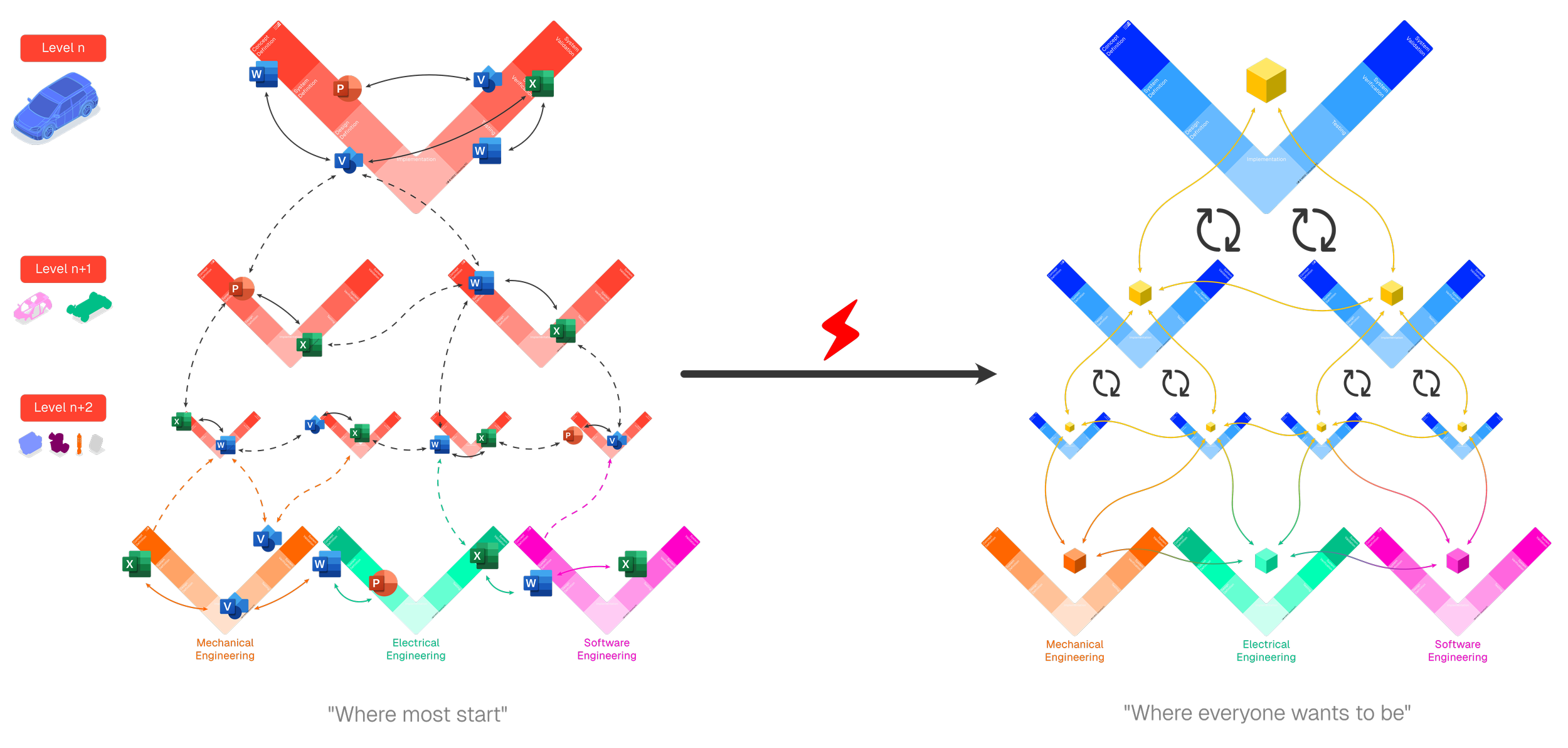
Most organizations try to jump from document-based engineering straight to full-scale MBSE. It doesn't work. The tool gathers dust, the pilot produces diagrams nobody uses, and the engineers go back to spreadsheets and documents.
The reasons compound: a new modeling language and methodology to learn, a new tool to master, and what most people underestimate, MBSE forces rigorous Systems Engineering practice that many teams haven't formalized yet. Add to that a vague understanding of what "model-based" actually means in day-to-day engineering work, and you have a transformation that overwhelms before it delivers.
The issue isn't the tool or the people. It's that nobody defined a realistic path to get there.
How we think about MBSE adoption
We don't believe in big-bang MBSE transformations. We've seen what happens when an organization tries to go from zero to enterprise-wide MBSE in one move: it breaks.
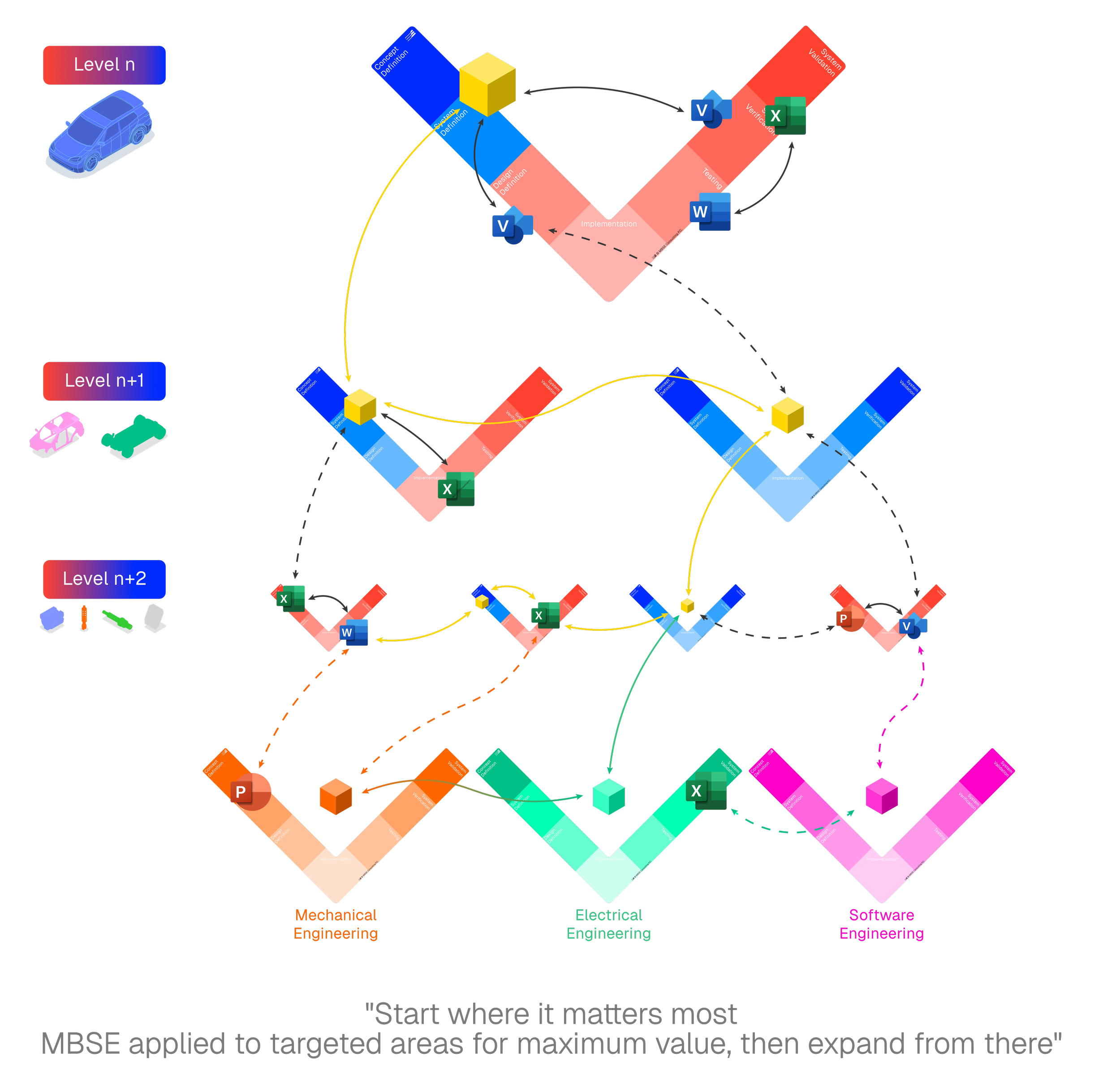
Instead, we approach MBSE adoption as a progressive journey. Start small, with a real problem and a real team. Deliver something useful fast, not a proof of concept that lives in a sandbox, but actual engineering value that people can see and use. Then build on that. Expand the scope, deepen the practice, train more people, at a pace the organization can absorb.
And here's what most people get wrong: you don't need to model everything for MBSE to deliver value. It is perfectly fine to use MBSE on targeted areas where it matters most while continuing with document-based engineering where it makes sense.
What we deliver
Focus on the MBSE Framework
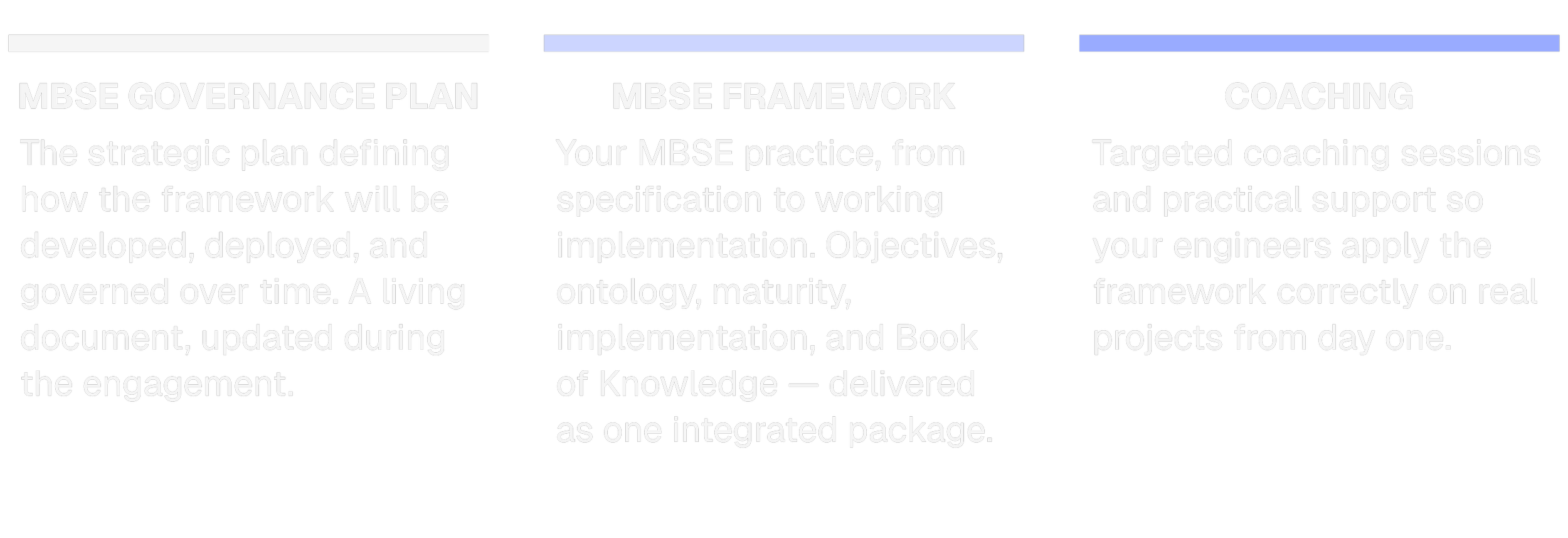
Every framework we build follows a structured chain, each component grounded in the one before it, so nothing is arbitrary and everything traces back to a real engineering objective. The chain doesn't stop at specification: Implementation produces the working tooling your engineers interact with daily, and the Book of Knowledge shows them how to use it.
The framework itself is formally modeled: Objectives, ontology, maturity rules, and implementation mappings are maintained as structured, traceable data, so the framework can be queried, validated, and evolved with the same rigor we ask of our clients' engineering models.

Objectives
What problems does the framework need to solve? What must engineers be able to do, produce, communicate, and verify? Everything starts here, not with a tool or a language, but with your engineering reality.

Ontology
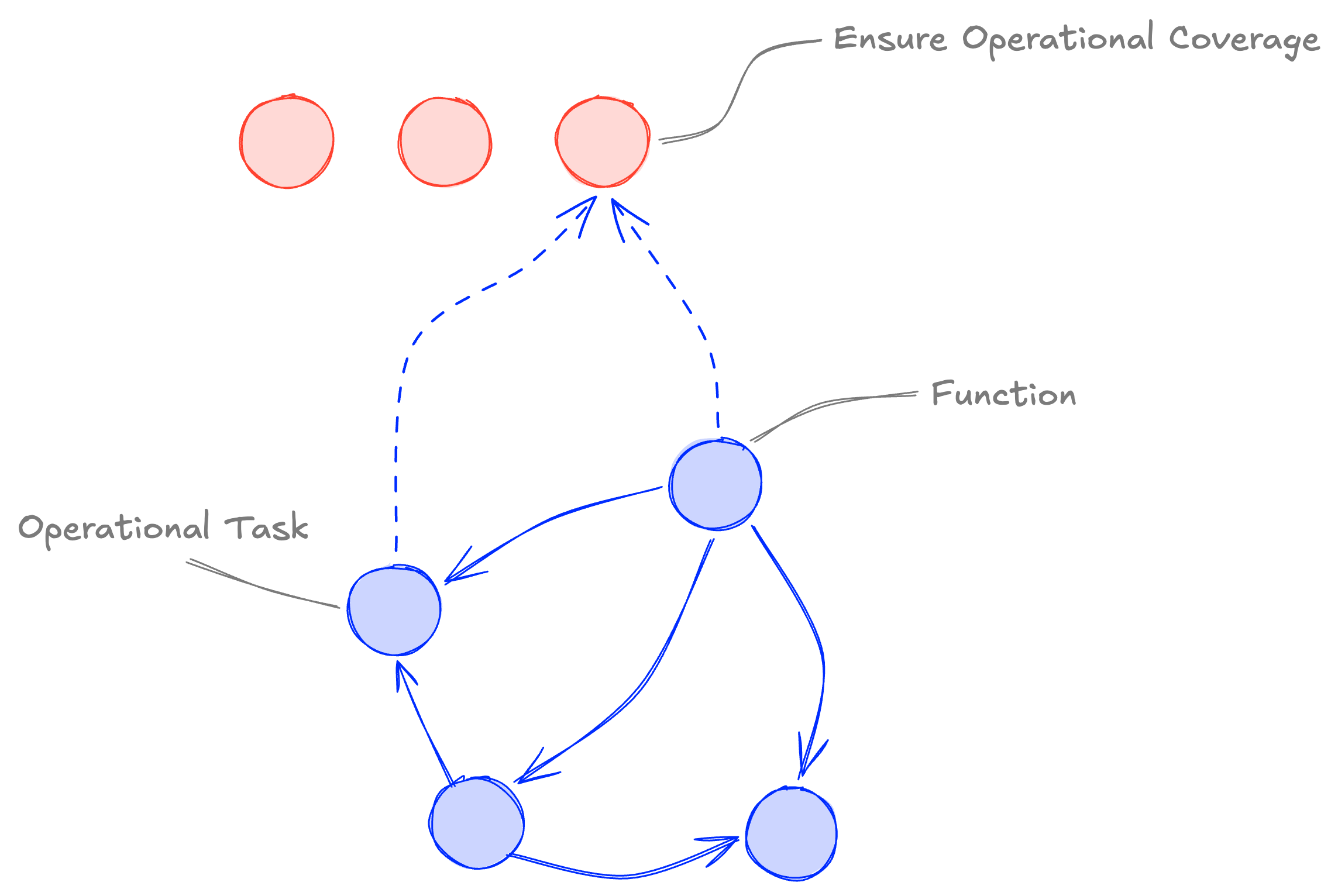
The common vocabulary of concepts, relationships, and semantics that your organization will need to achieve objectives. This is what gives the framework its coherence, every team, every project, speaking the same language.
Every concept in the ontology traces back to an objective. If it doesn't, it's out of scope, because a concept that serves no engineering objective is modeling effort that produces no value.
Maturity
A model is not a static artifact, it evolves alongside the system development, growing in depth and completeness as engineering progresses.
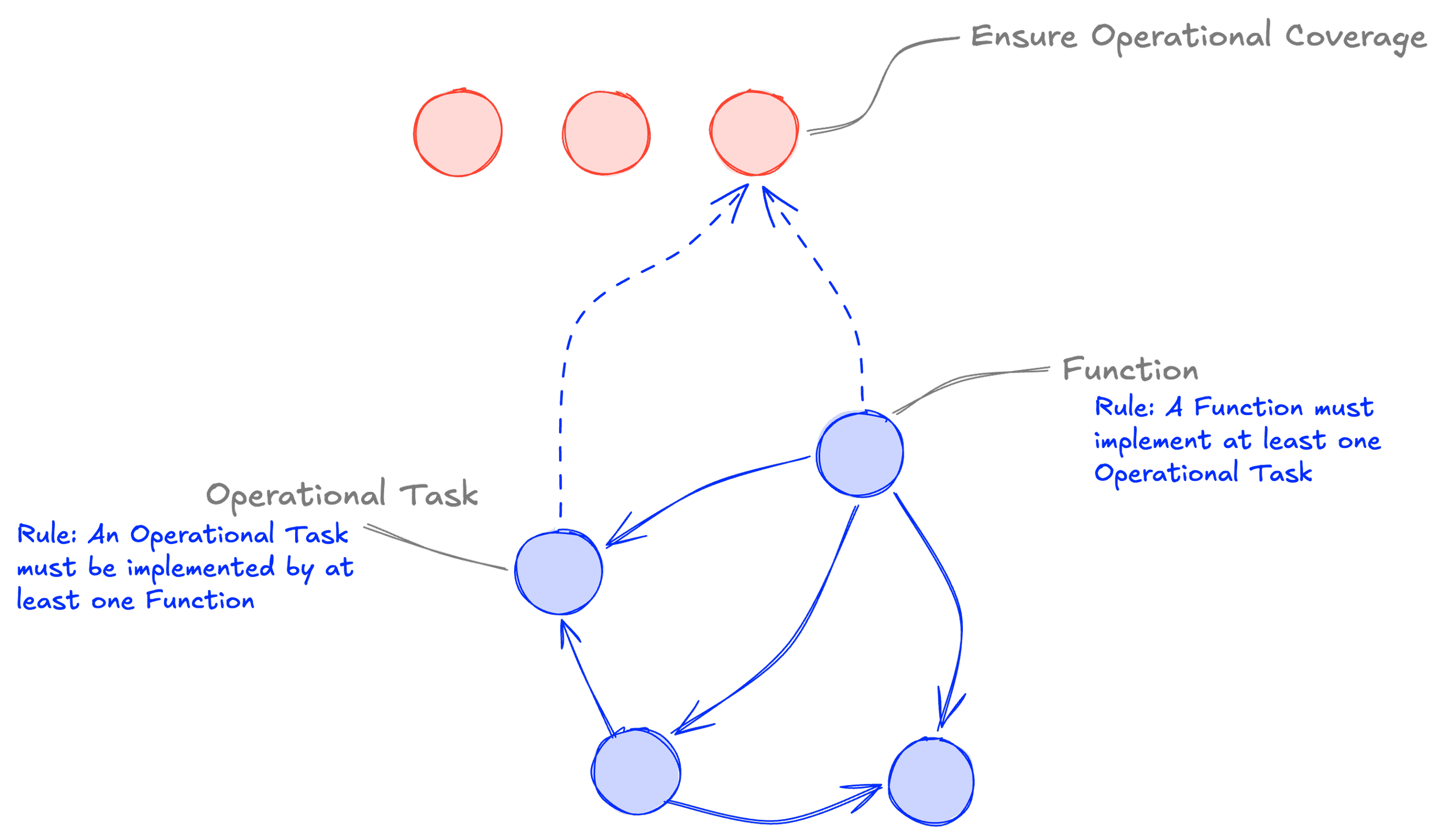
Maturity rules, defined at the ontological level, let your projects assess where the model stands at any point in time: what's been defined, what's missing, and what's consistent. Not a binary pass/fail, but a graduated view that tracks model quality as a proxy for system development progress.
Implementation
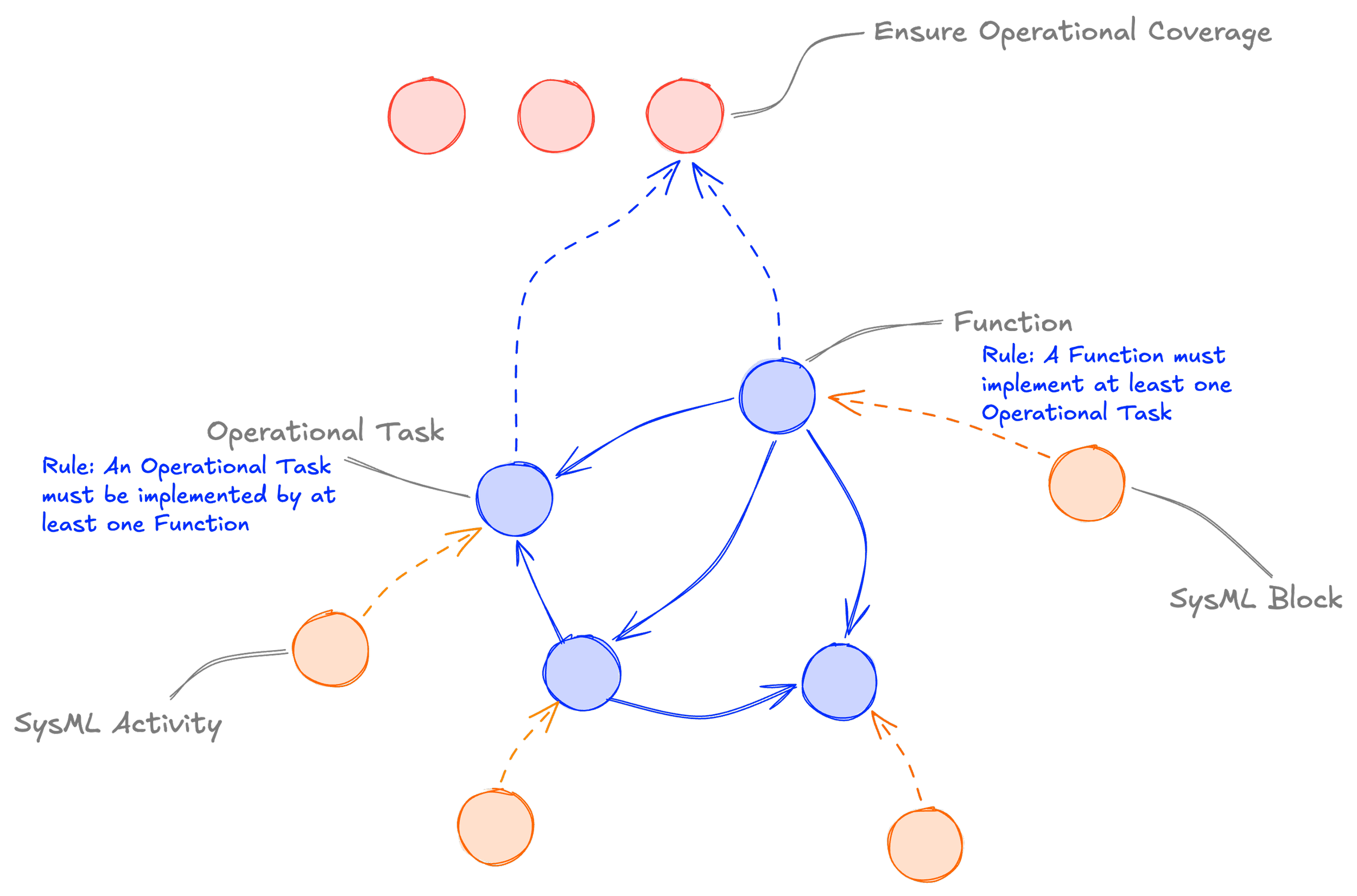
Where the framework becomes real in the tool. The ontology maps to the language and customizations, maturity rules become validation rules, and the modeling experience is shaped through automations and UI customization.
Every implementation choice opens or closes doors: it determines what your engineers can express, how they navigate the model, and how intuitive the daily experience feels. A poor mapping can make the right thing hard to do and the wrong thing easy. This is where framework design becomes craft, each decision weighed against the objectives to ensure models produce value, not friction.
Book of Knowledge
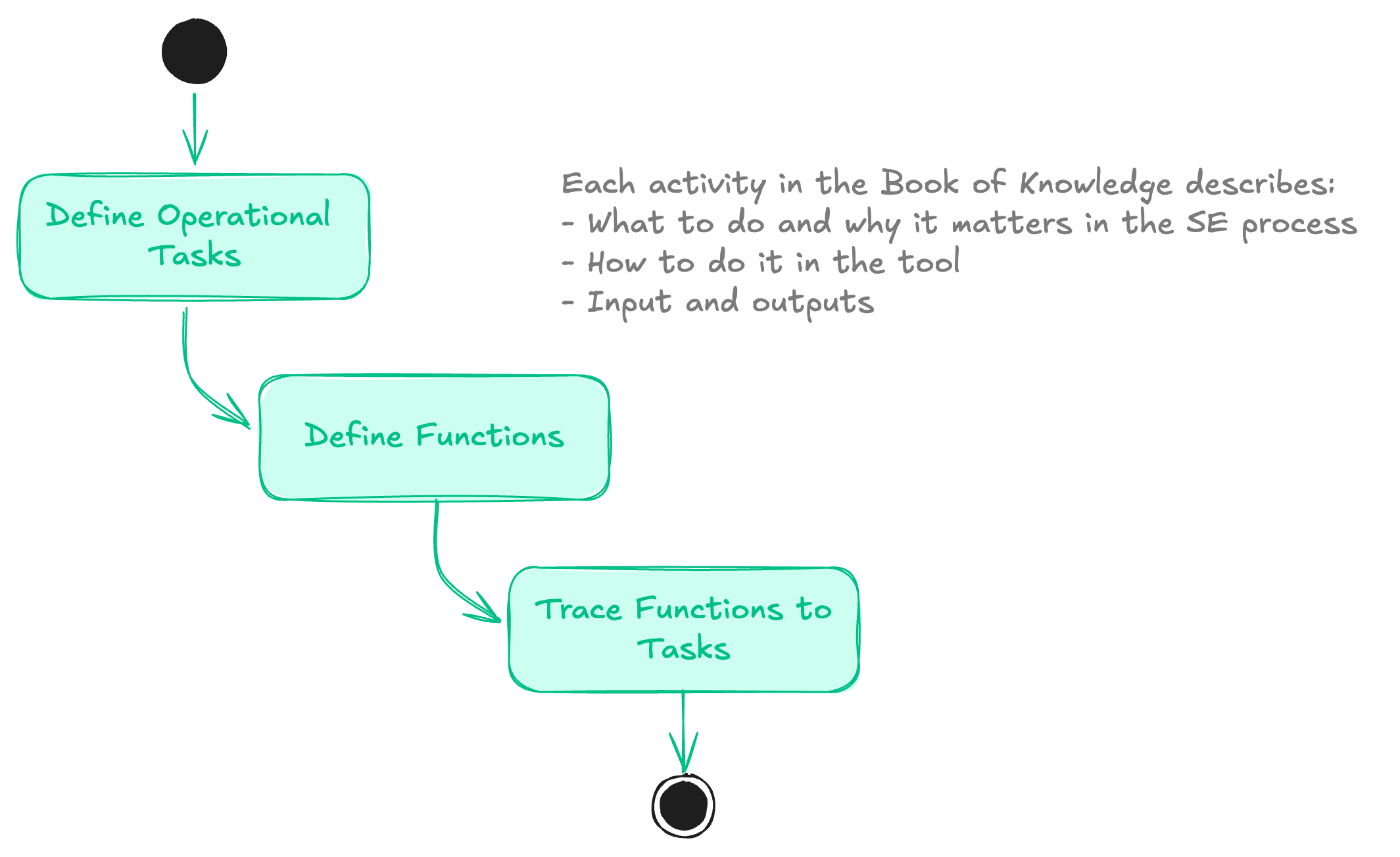
The practical guide for your engineers: how to perform each supported SE activity in a model-based environment, using the tool artifacts produced by Implementation, customization, automations, templates that make the framework tangible in daily work. All traced to your internal processes and Systems Engineering standards.
How we engage
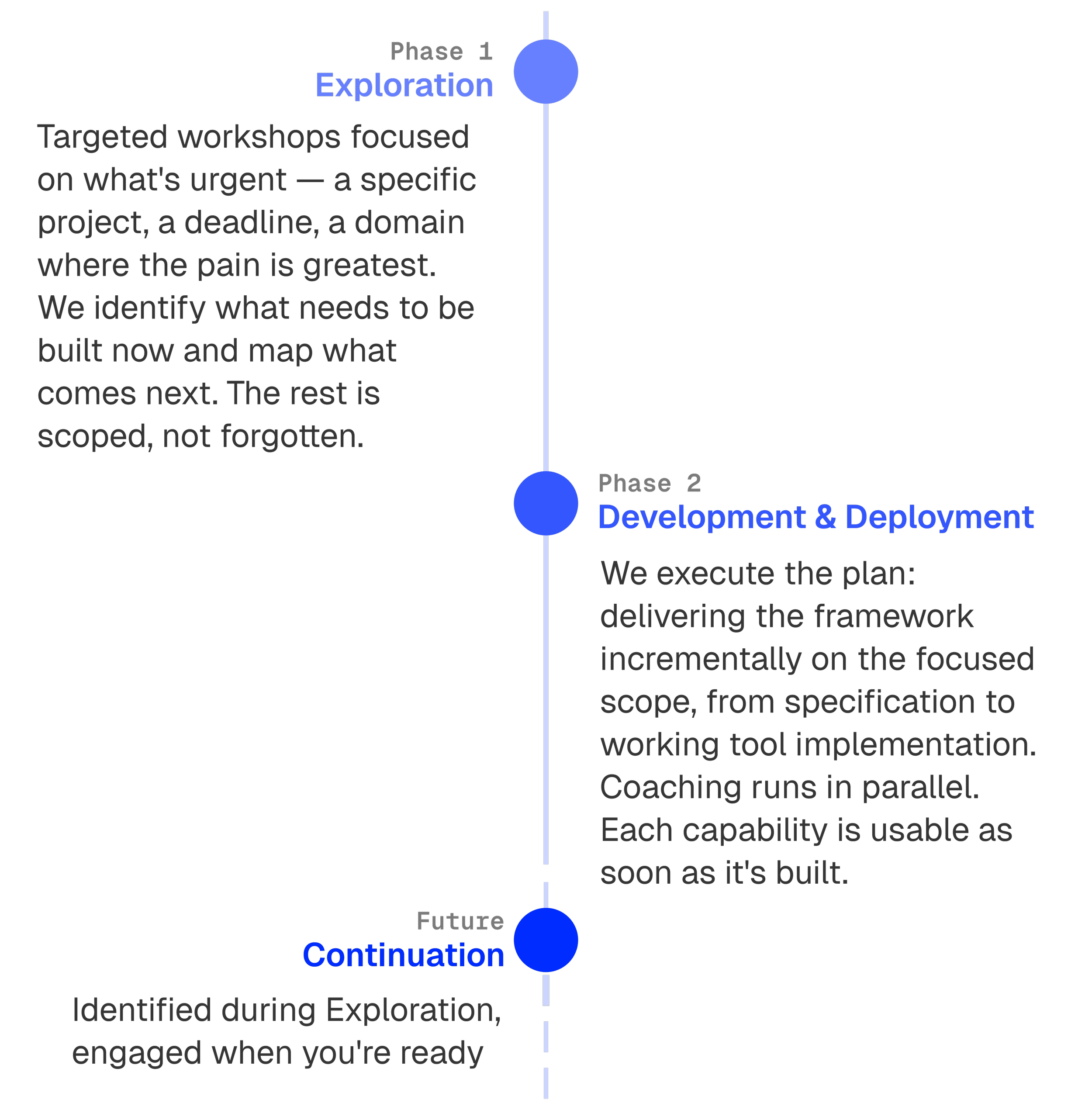
We separate scoping from execution. This protects you from the classic consultancy trap: a big proposal built on assumptions, locked in before anyone really understands the problem.